Quiet Chaos
Collages of cities, vegetation and the people who might live in between.
At six in the morning, along the Po, Turin wakes up in silence. The trees on the river draw shadows that change the geometry of the city while almost everyone is still asleep. It is in those moments that I started asking myself whether we have ever really understood what "urban culture" means.
For years I thought of a city as a weave of people, spaces and signs: palaces, museums, festivals, galleries, clubs, communities. A reassuring definition, and an incomplete one. It leaves out the natural dimension — the one that accompanies the city in silence, protects it, regulates it, makes it liveable. Above all the trees, which more than any other living thing are part of its design, and the part we forget first.
Trees are the real urban planners. They grow while we sleep, they shift perspectives, they create microclimates. They do not decorate the city: they project it. And yet we keep talking about them as furniture rather than as living architecture.
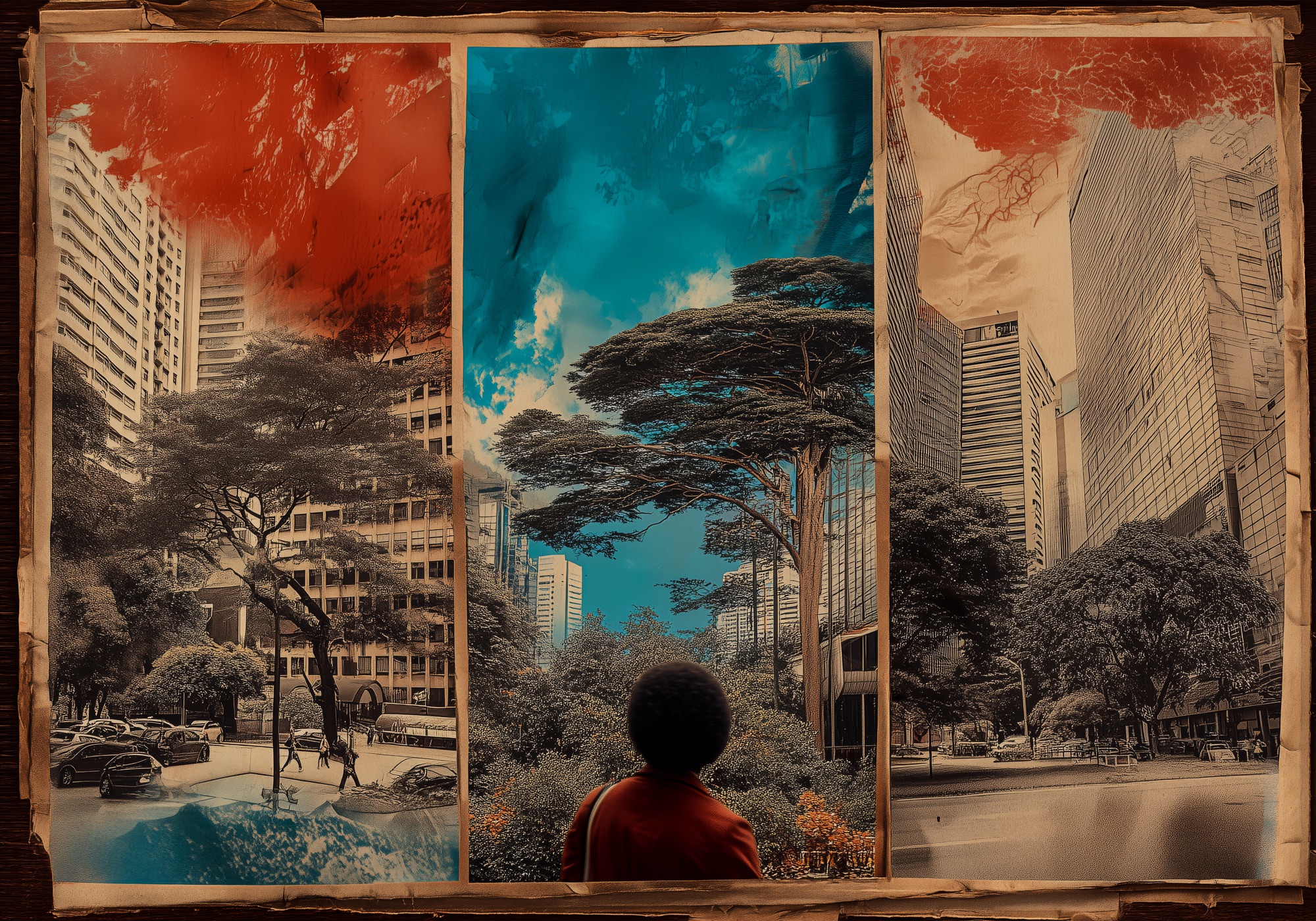
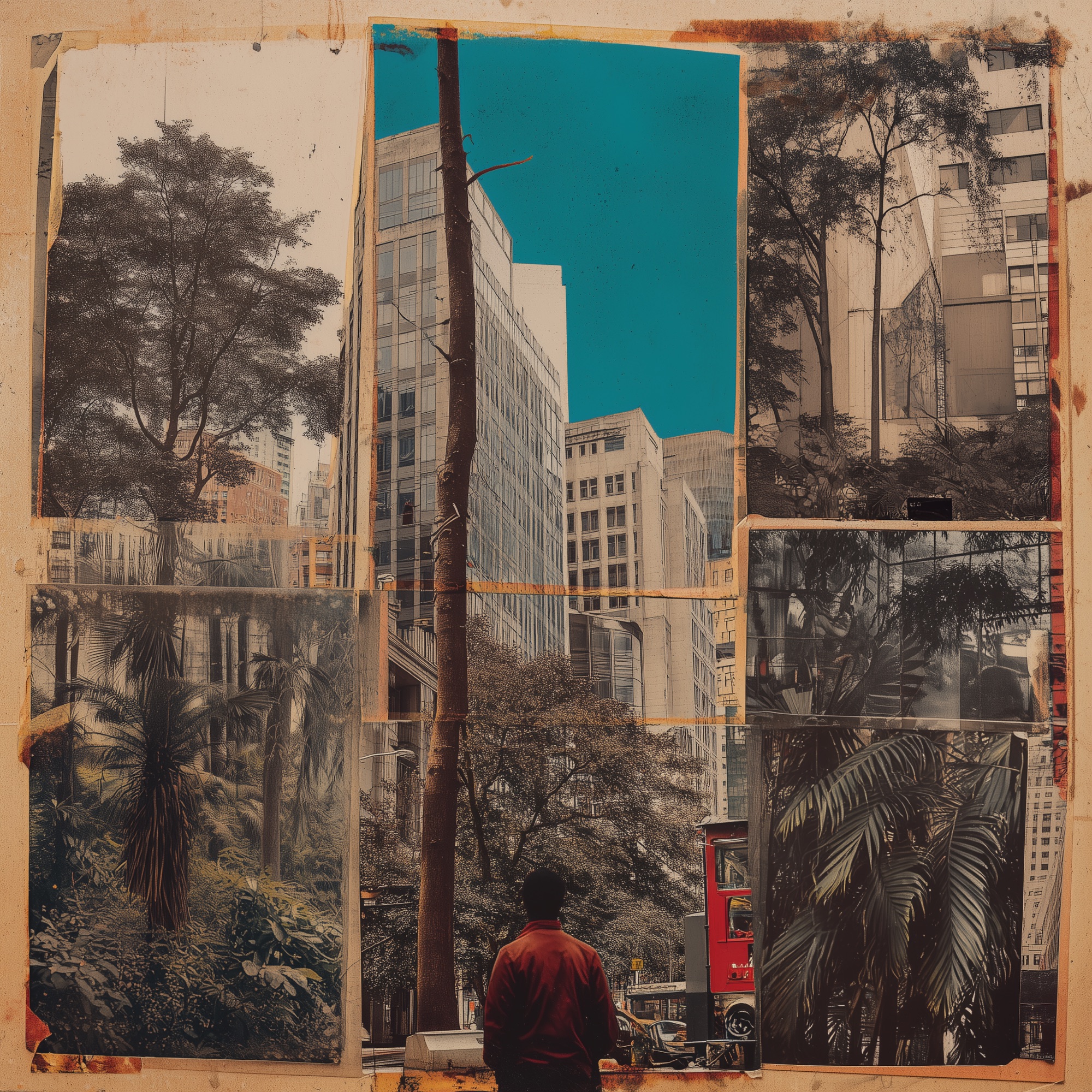
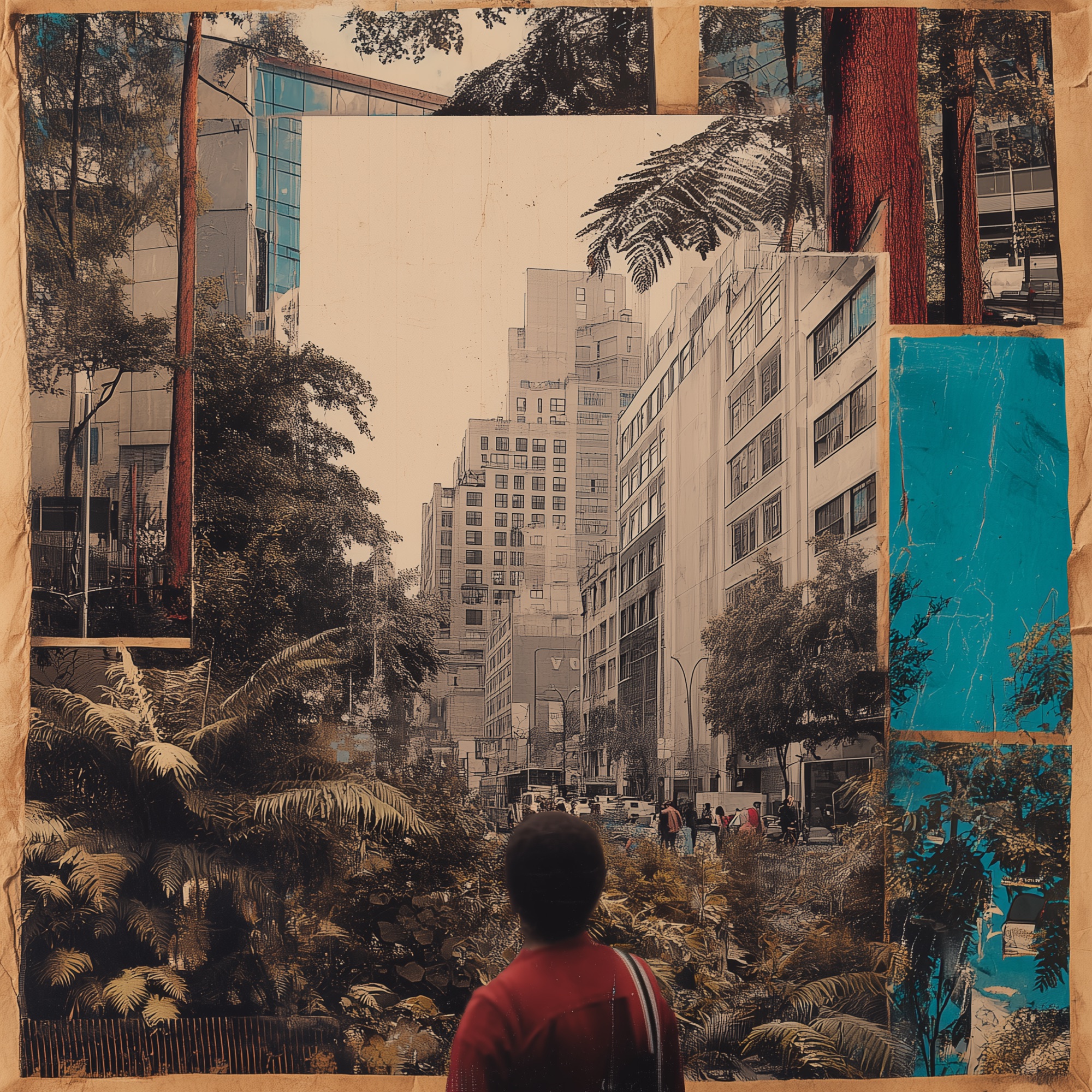
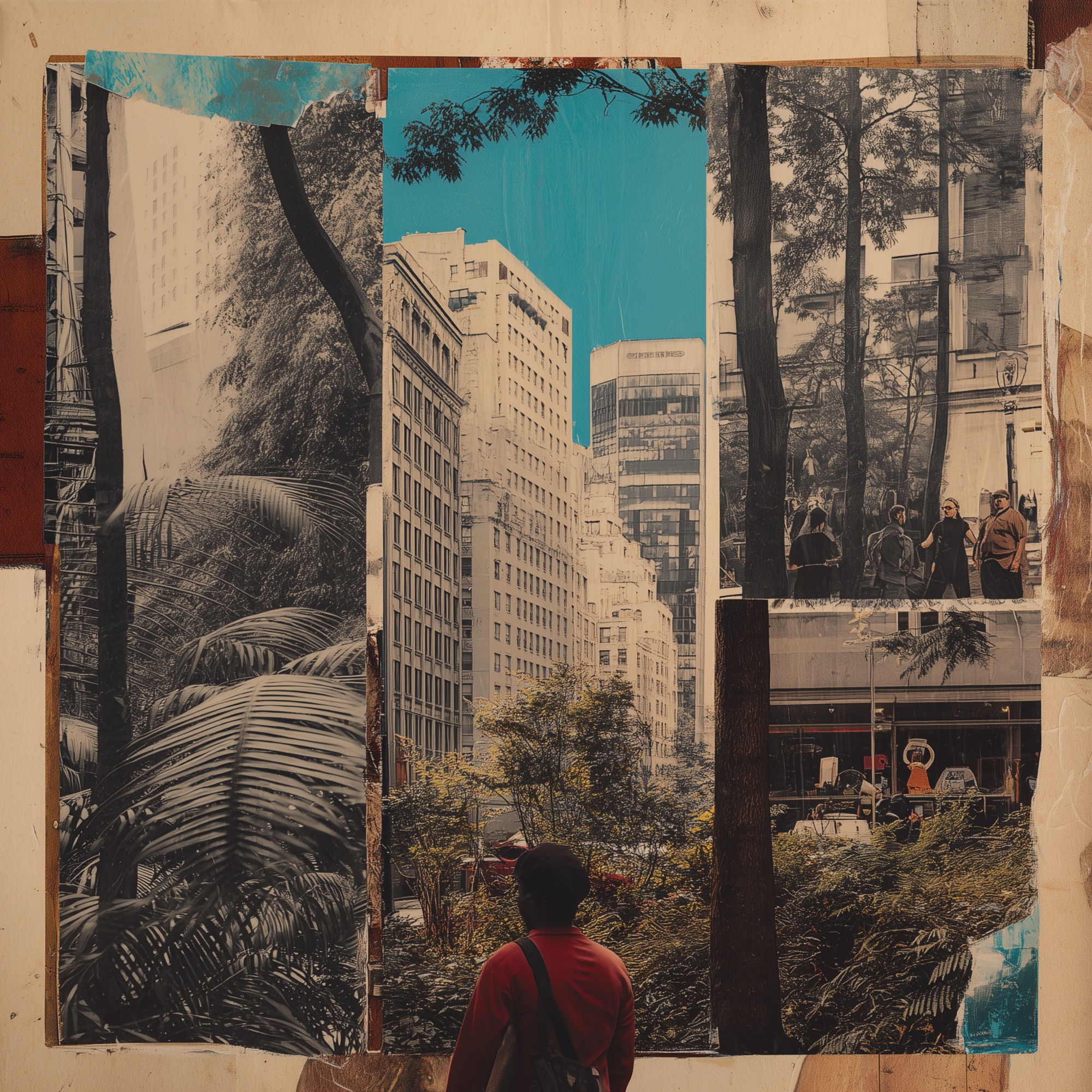
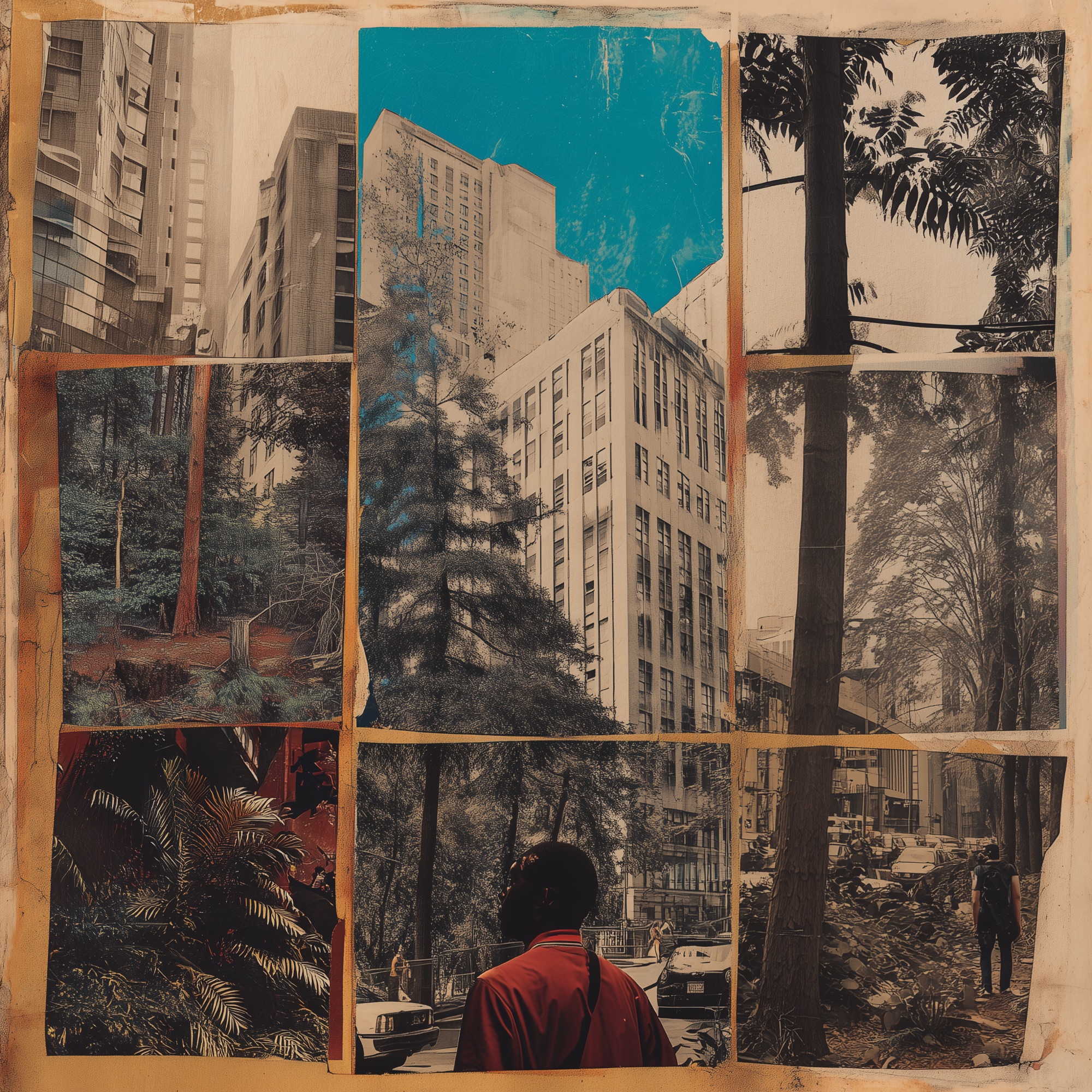
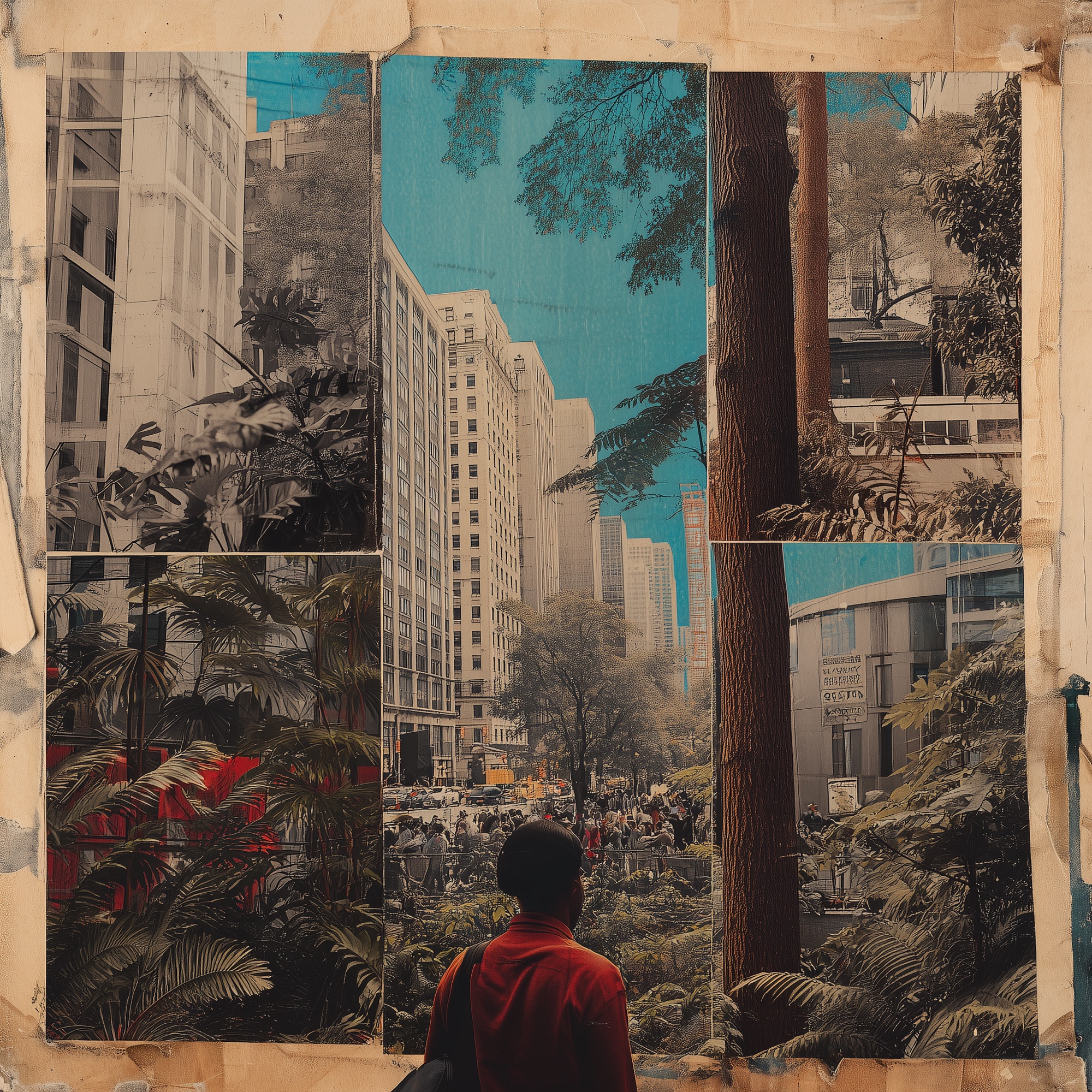
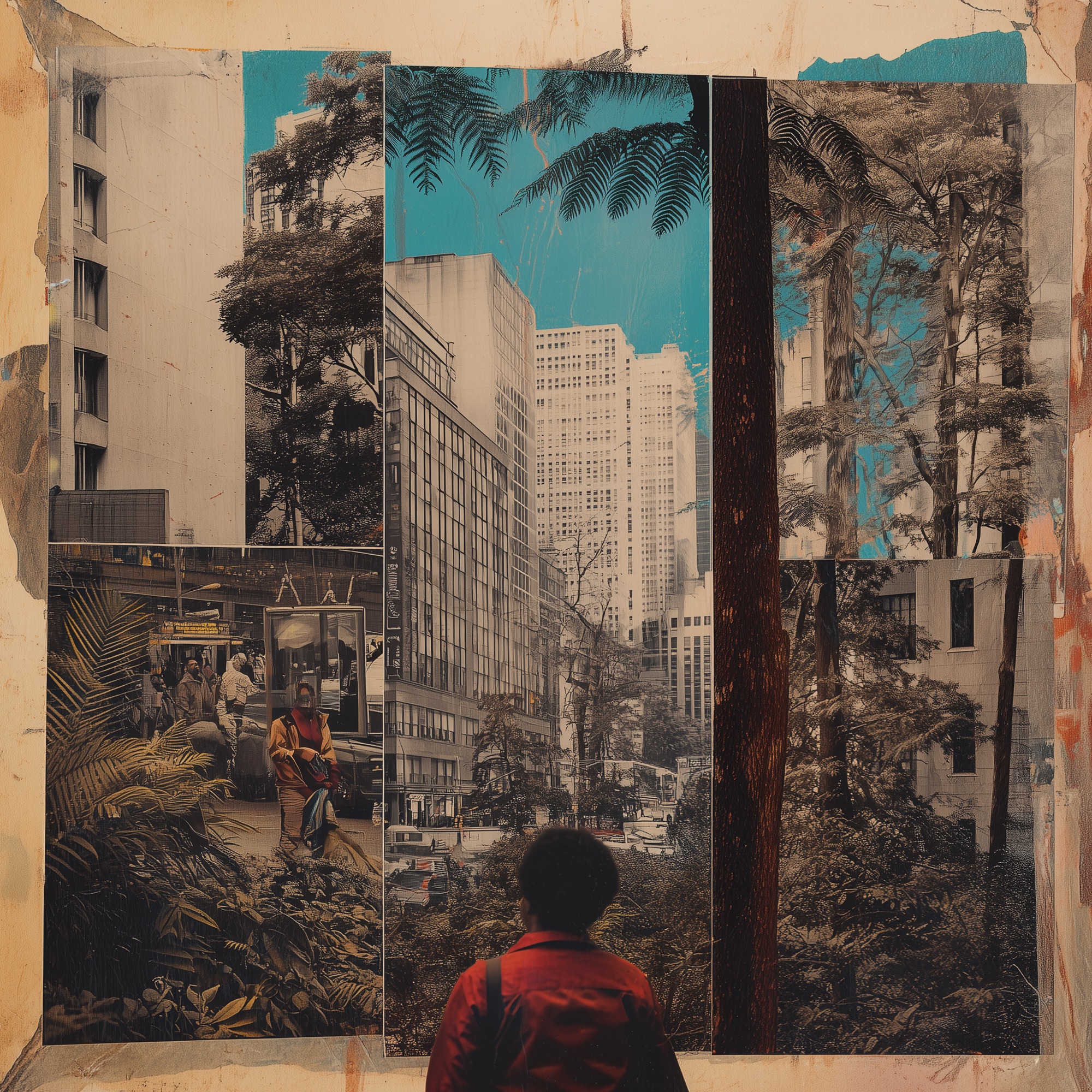
"Quiet Chaos" is a series of colour collages where that order is reversed. Fragments of façades, towers, tramlines and shop windows are layered with palms, ferns, trunks and undergrowth, and with figures who look as if they were photographed in another decade — pasted, taped, torn at the edges, like pages from a sketchbook of a city that has not been built yet. The chaos is quiet because nothing in it is violent: the vegetation does not take the city back, it moves in, and the city lets it.
It is a way of imagining how we may live next. Not the smooth, rendered "green city" of the brochures, but something closer to what a street actually feels like when a canopy closes over it: cooler, slower, less legible, more alive. A city where the architecture has to negotiate with something that keeps growing after the architects are gone.
Planting a tree today is a subversive act. Whoever plants knows they will not sit in the full shade of what they planted. In a city that measures everything in electoral terms, seeding for decades that will not belong to you is a quiet form of resistance, and the only real definition of culture I have found: the capacity to sow without harvesting, the courage to build for people we do not know yet.